
Plan a Hall County Search
Hall County has no universal name database. Instead, each public office records a specific event or relationship. The Tax Assessors connect owners to parcels. The Clerk of Superior and State Courts records deeds, court cases, trade names, liens, and notary appointments. Probate Court connects names through estates, wills, guardianships, and marriages. Gainesville and county staff lists identify public employees in their work roles. Historical directories and newspapers add residents, relatives, employers, and former addresses.
Start with the fact already known and choose the record that was created because of it. A present street address belongs first in qPublic and GIS. A lawsuit belongs in the correct court. A family death may lead to probate, an obituary, and a death record. Name variants, middle initials, municipality, and a narrow date range matter in a fast-growing county where same-name matches are common.
- Define the relationship. Decide whether the target is an owner, court party, heir, business officer, public employee, or historical resident.
- Search the official index. Use qPublic, the Hall court router, GSCCCA, Probate Records, or a named directory.
- Record stable identifiers. Save parcel, case, book and page, control, or instrument numbers.
- Cross-check one other source. Compare dates, addresses, middle names, and roles before treating two entries as one person.
- Ask the custodian. Use the counter or a narrow records request when an image or older file is not online.
Hall County People Records Offices
The Clerk is Hall County's central name-bearing office because it serves both as trial-court clerk and recorder. The Real Estate Division holds the land index and counter copies. Probate Court keeps estates and marriages. The Tax Assessors maintain the owner roll, while Gainesville routes city administrative records through its own records specialist. Detailed access rules, fees, and exemptions belong with the Hall County public records system.
These offices are fallbacks as well as starting points. The courthouse counter matters for old books, certified copies, and files missing from a web result. Gainesville warns that its ordinary contact form may delay a request, so city records should go through the dedicated channel.
Search Hall County Deed Names
The GSCCCA real-estate index offers statewide modes for real estate, liens, plats, and UCC filings. Search concepts include grantor or grantee name, county, instrument type, date, and recording identifiers. A grantor gives or transfers an interest; a grantee receives it. Hall County's physical land records reach its 1818 founding, but the exact online start date was not verified. An empty web search must not be read as proof that no older deed exists.
| Search control | Best use |
|---|---|
| Grantor or grantee | Find a person who transferred or received land |
| County | Limit statewide results to Hall |
| Instrument type | Separate deeds, liens, plats, and UCC records |
| Date or book/page | Narrow common names or open a known filing |
The manifest image below comes from the official GSCCCA search gateway.
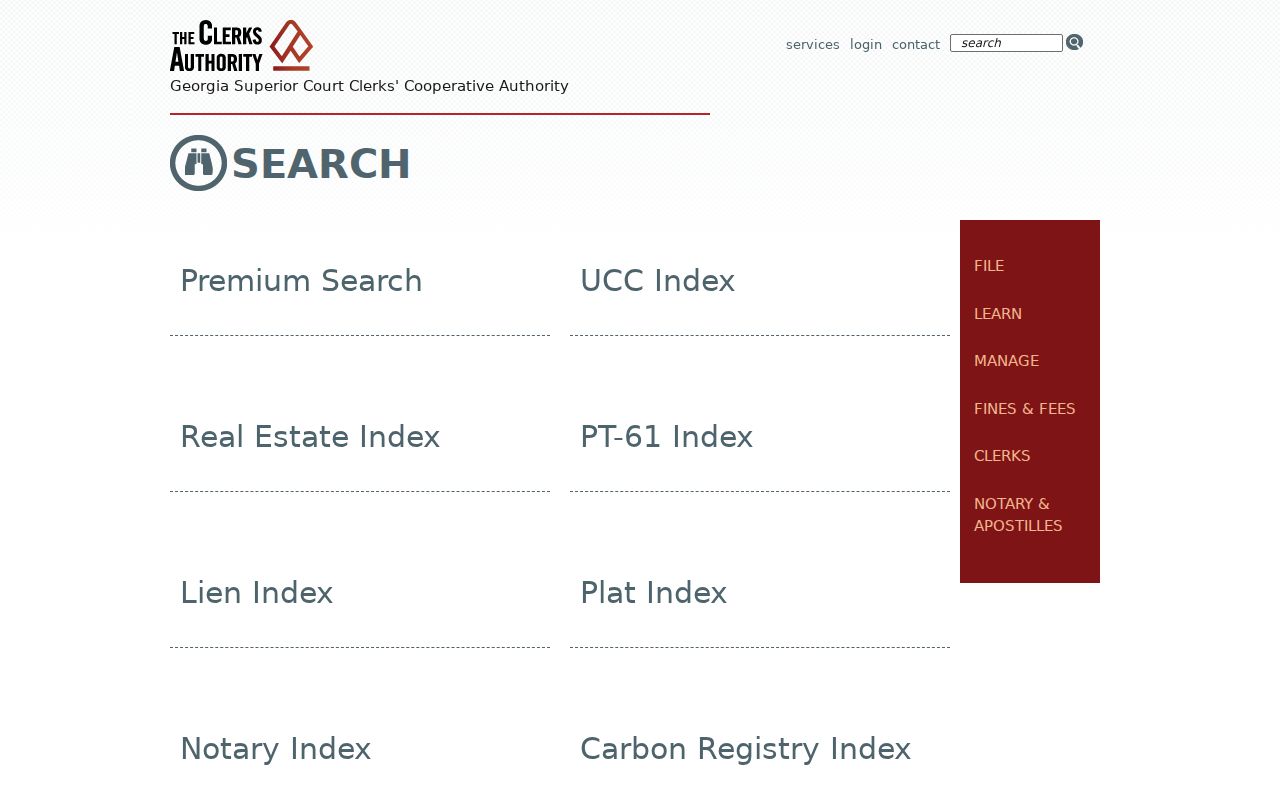
Its access controls reinforce the difference between a statewide index, an instrument image, and a certified courthouse copy.
Note: At the counter, provide the acquisition year and owner name; ordinary Real Estate Division copies cost $0.50 per page.
Trace Hall County Property Owners
Hall County's qPublic parcel search links owner names with parcel IDs, mailing and situs addresses, values, sales, land and building data, exemptions, and maps. Situs means the land's physical location. Mailing address means where assessment or tax correspondence goes. The two may differ, and the mailing address may be the stronger contact lead. A homestead entry can suggest a primary residence, but it does not prove current occupancy.
Use the Hall County GIS gateway to check parcel geometry, zoning, subdivisions, flood areas, utilities, election geography, and future land use. A Gainesville postal label does not prove that land sits inside Gainesville city limits. That distinction controls which government keeps permits or business-license files.
The county's GIS applications are shown at the official map gateway.
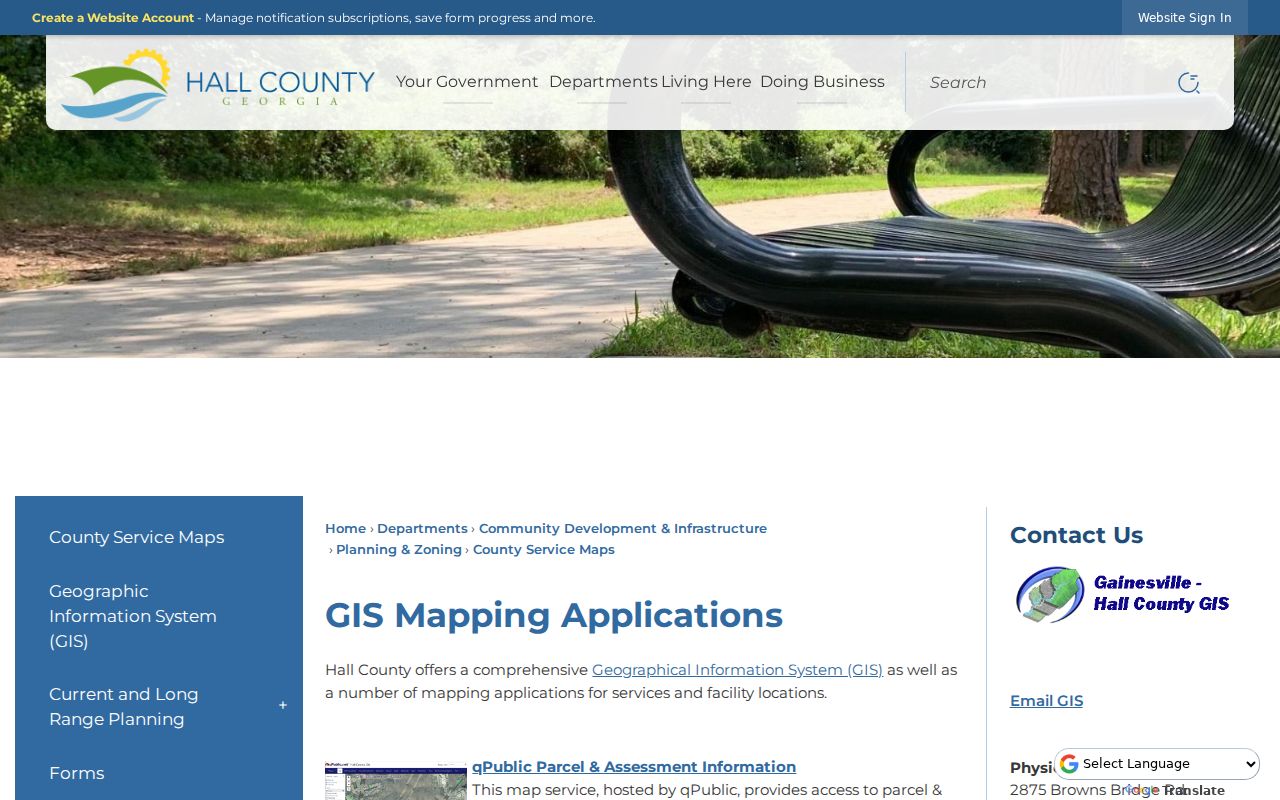
The listed layers help turn an address into the right parcel, district, municipality, and records custodian.
Useful trail: street address → qPublic owner and mailing address → GIS boundary → newest deed → prior deed references.
Route Hall County Court Searches
Court names in Hall County are split across systems. Superior Court handles felonies, divorce, equity, title, appeals, and general civil matters. State Court hears misdemeanors, traffic, and non-equity civil cases. Magistrate Court handles small claims, dispossessory cases, warrants, and preliminary hearings. Probate Court holds estates, wills, guardianships, and marriage matters. Juvenile files are restricted. Gainesville Municipal Court handles city-code and misdemeanor traffic cases, but no verified public party-name docket was found.
The Hall court router sends users to Superior and State Courts or Magistrate Court. A docket is the event list for a case, not the full evidence file. Results may identify parties, roles, case number, filing type and date, attorneys, events, and disposition. Sealed cases, adoptions, juvenile matters, protected victim data, and personal identifiers may be hidden. The Clerk remains the source for more information and certified copies.
The current choices appear on the official Hall docket gateway.
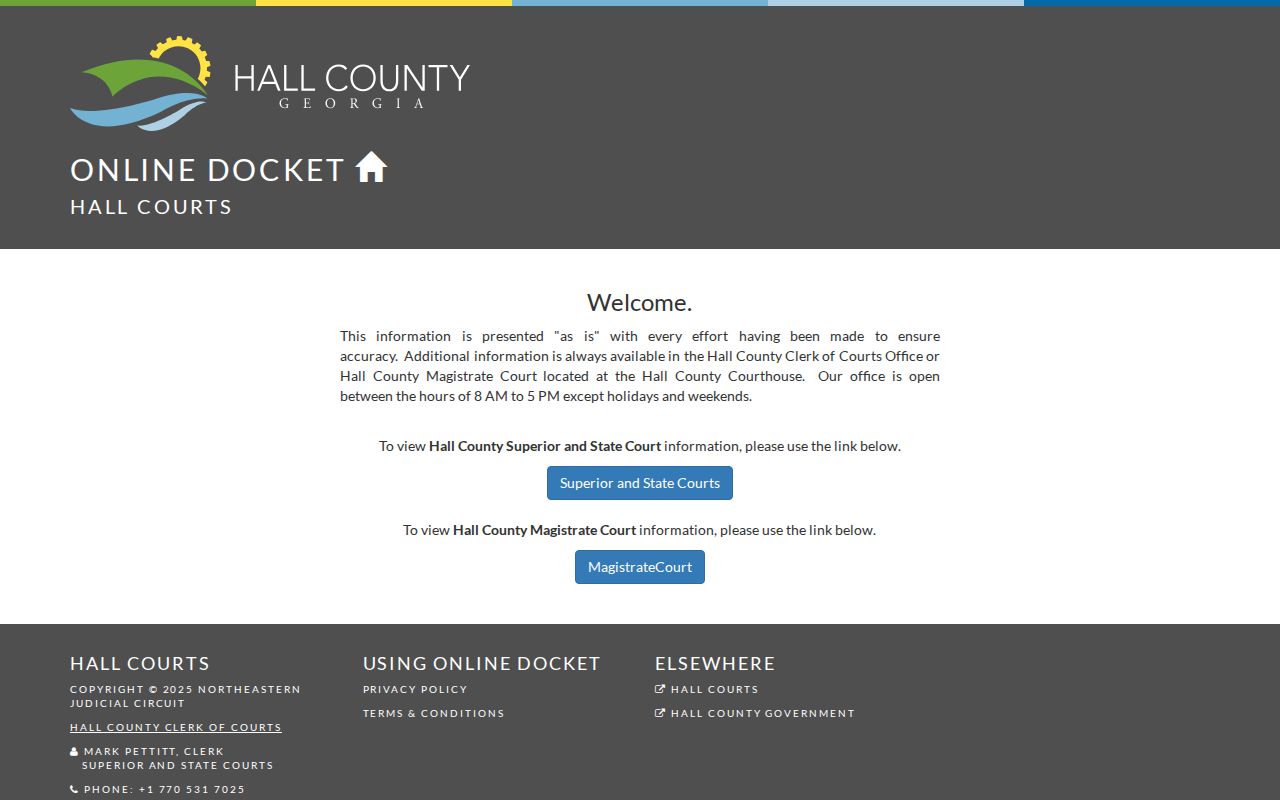
The two routes prevent a common error: searching the Superior and State tool for a Magistrate case.
| Hall court | Typical record | Lookup or fallback |
|---|---|---|
| Superior and State | Civil, criminal, domestic, traffic | Hall web case management, then Clerk |
| Magistrate | Small claims, warrants, preliminary hearings | Magistrate route, then court |
| Probate | Estates, wills, guardianships | Georgia Probate Records; most Hall estates after 2010 |
| Gainesville Municipal | City-code and traffic matters | Court or JustFOIA request |
Find Hall County Heirs
Probate, obituaries, deeds, and directories form a strong family trail. Begin with the Georgia Probate Records portal, which includes most Hall estate cases filed after 2010. A case may identify the decedent, petitioner, executor, heirs, lawyers, and dated filings, subject to restrictions. Older or absent files require the Probate Court counter. Wills and estate pleadings can connect married names or relatives when a directory alone cannot.
Then search Georgia Historic Newspapers for an obituary, marriage notice, legal notice, or community column. Newspaper text is evidence to check, not a certified fact. OCR may miss a faded or unusual spelling, so try initials, surname variants, an employer, or a mill-community name.
For old county material, the Hall County Library's local-history collections and Georgia Archives add tax digests, maps, cemetery and church files, county microfilm, and historical death records. Give an archivist a narrow date span, known address, employer, school, and name variants.
Check Hall County Vital Records
Hall County Vital Records at the county health department issues local birth and death copies. Hall Probate Court handles marriage records, while divorce decrees stay with Superior Court. Georgia's statewide birth and death registration begins in January 1919. Birth copies require a qualifying relationship. A certified death copy requires a direct and tangible interest, although the public may request a plain-paper death copy with the Social Security number removed.
The Georgia vital-record request service describes online, mail, and counter channels. Birth and death copies cost $25 for the first copy and $5 for each added copy in the same order. State marriage holdings cover June 1952 through August 1996, with verification from January 2014 forward; other years should be checked with Hall Probate Court. A failed search may yield a not-on-file letter rather than a certificate.
Family historians must cross the statewide boundary with care. Gainesville kept a birth register and death material before 1919, but the Archives descriptions conflict on the precise death-register span. Verify the film title before stating exact coverage. Historical statewide death certificates and indexes provide another route.
- Certified copy
- An official copy authenticated by the custodian.
- Decedent
- The person whose death is recorded.
- Index
- A finding aid that points to a record but may not show the full document.
- Plain-paper copy
- An informational copy without certification.
Search Gainesville Mill Directories
The Digital Library of Georgia's Gainesville city directories are unusually useful for Hall County searches. Confirmed Polk editions from 1956 and 1959 include Chicopee, Gainesville Mill, and New Holland. A resident may appear under a mill village or employer rather than a modern neighborhood name. Search full text for surnames, initials, streets, firms, and community variants, then compare adjacent editions to bracket a move or death.
A directory entry can connect a person to an address and work affiliation, but it does not prove ownership. Follow the address into an era-appropriate deed, tax digest, newspaper, or probate file. Lake Lanier's mid-century creation changed roads, communities, cemeteries, and parcel context, so present-day GIS may show water or federal land where an old road once ran.
The full directory landscape, including government and school contacts, is organized on the Hall County directories page.
Verify Hall County Business Names
The Georgia business search accepts a business name, control number, registered agent name, or officer name. Results can show entity status, formation jurisdiction, principal and registered-office addresses, agent, officers, annual registrations, and filing history. Hall County trade names, often called DBAs, are filed separately with Superior Court. A searcher may therefore need both eCorp and the Clerk's trade-name records.
Professional licenses are split among the Secretary of State verification portal and specialist boards. License status can help distinguish two people with the same name. For a business physically based in unincorporated Hall, the county license office is the right route; Gainesville and other municipalities keep their own licensing records. Confirm jurisdiction in GIS before requesting a local file.
Request Missing Hall County Records
Hall County moved general open-record requests to new software on July 1, 2026. Four important channels remain separate: Sheriff, Elections, Environmental Health, and court records. Choosing the custodian is part of the search. A jail or incident request goes to the Sheriff, an election file to Elections, and a case document to the court clerk. The general portal should not be used merely because it appears first.
Georgia's Open Records Act lets any person request an existing, nonexempt record. The office must respond within three business days, although production can take longer. A focused request names the record type, person variants, approximate dates, and any known parcel, case, booking, or book-and-page number. It also states whether an electronic, plain, or certified copy is needed. Agencies do not have to create a new report that does not exist.
The Hall County routing page shows the current request divisions.
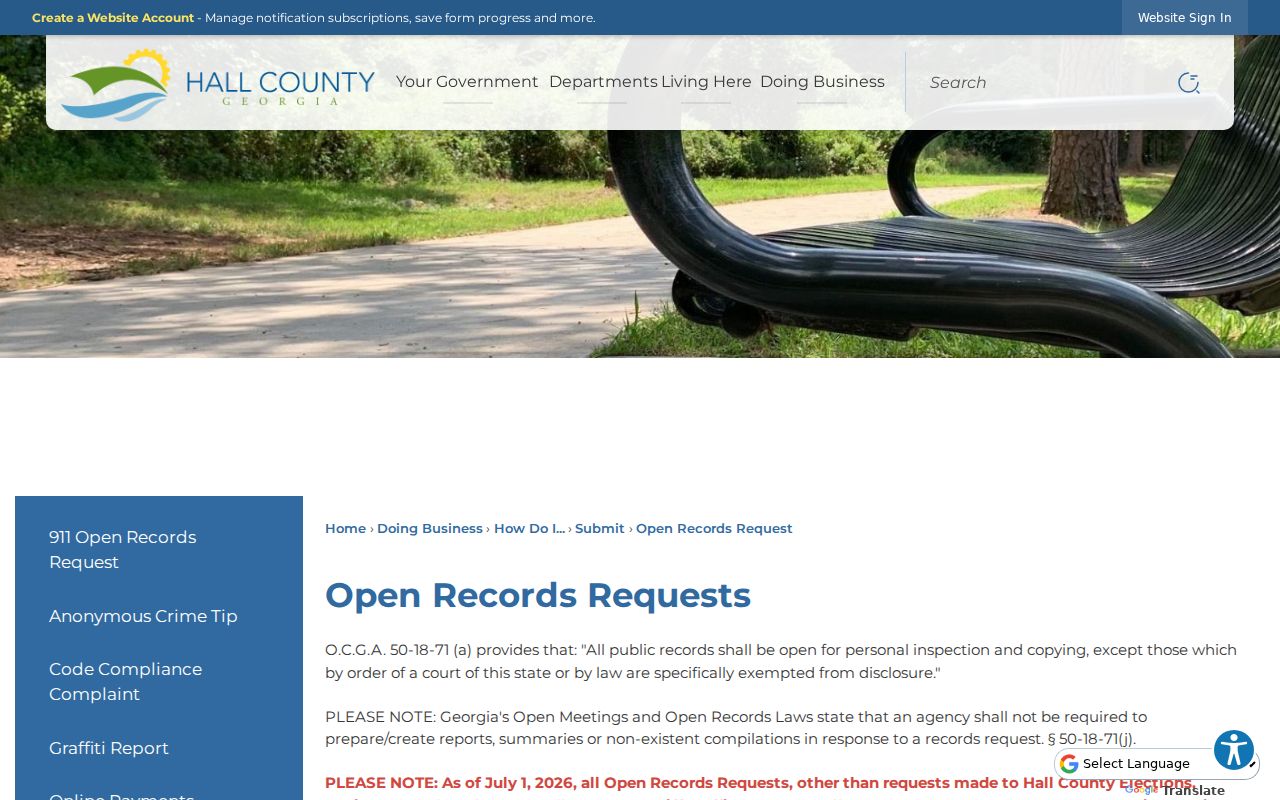
The listed exceptions explain why a correctly routed request can be faster than sending the same text to the general custodian.
Use Gainesville Records Requests
City records follow a different channel. Gainesville directs requesters to JustFOIA for council and board files, staff records, permits, planning applications, code matters, business-tax or license files, cemetery records, and other city material. The first 15 labor minutes are free. Later search, retrieval, redaction, and supervised inspection use the lowest-paid qualified worker's rate. Standard black-and-white copies cost $0.10 per page, and certification charges are separate.
The city's official request form is visible through the Gainesville public portal.
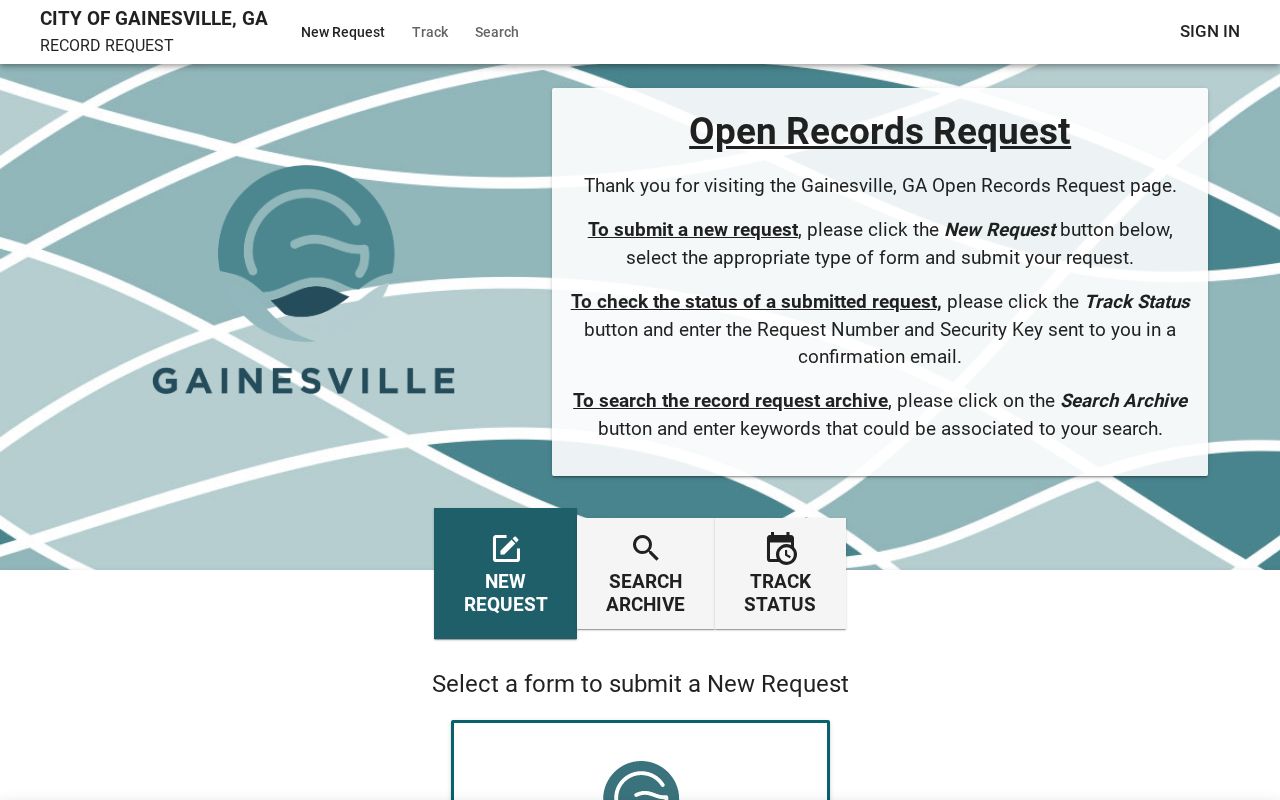
Email delivery is preferred, and the portal can return an availability decision, exemption statement, or time and cost estimate.
Read Hall County Online Gaps
An absent web hit does not prove that Hall County has no record. It may mean the wrong court was searched, the record predates an online cutover, an account gate hides an image, the name was indexed differently, or the source survives only on paper or microfilm. Hall was created in 1818, so county series cannot predate that date. Earlier family trails may require Cherokee-era, parent-area, land-lottery, federal, church, or family sources.
The 1936 Gainesville tornado devastated downtown, but no verified basis supports a blanket claim that it destroyed courthouse holdings. Check the survival of the specific series. The same care applies to the web: the Clerk may hold an 1818-forward physical series while online coverage begins much later. The counter, library, Archives, and a narrow request are not secondary guesses. They are documented access channels.
Search spelling also explains gaps. Recorded land names may use initials, a former married name, an estate designation, or a business name. Historical OCR can split a surname or confuse worn type. Try a shorter name, nearby years, and an address or employer. For a Lake Lanier area trail, compare old maps, road names, cemetery surveys, and newspapers before trying to force the old place into a modern parcel. For someone connected to Gainesville's poultry and mill economy, corporate filings, trade names, directories, and community news may reveal more than a current residential index. Each added source should confirm a date, role, address, or relationship rather than merely repeat the same name.
Use records lawfully. Official name and address data must never be used to stalk, harass, threaten, or harm another person.