
Which Hall County Records Are Open
Georgia law starts with a broad right to inspect existing, nonexempt agency records. Access then turns on the kind of file, its custodian, and any statute or court order that limits disclosure. Hall County public records therefore range from freely searchable parcel data to vital certificates available only through an eligible request. The table marks the best first channel and the limits that matter most.
| Hall record group | Official keeper | Web access | Copy or access path |
|---|---|---|---|
| Deeds, liens, plats, UCCs | Clerk, Real Estate Division | GSCCCA; online start not verified | Index or instrument access; counter copies cost $0.50 per page |
| Superior and State cases | Clerk of Superior and State Courts | Hall court search; dates not verified | Open unless sealed or restricted; clerk and eCert fallbacks |
| Probate estates and wills | Hall Probate Court | Most estate cases after 2010 | Statewide probate portal or courthouse counter |
| Parcels and assessments | Hall Tax Assessors | qPublic, updated weekly | Free search; assessor request if needed |
| Births and deaths | Hall Vital Records or Georgia DPH | Limited historical indexes | Eligibility rules apply to certified copies |
| Jail and incident material | Hall County Sheriff | Channel varies | Sheriff-specific request, not the county portal |
| Business and licenses | Georgia SOS and licensing boards | eCorp and license verification | Free index; certified records separate |
Juvenile matters, adoptions, sealed cases, protected victim details, and some investigative material are not ordinary open files. Recent vital certificates use relationship or interest tests. Motor-vehicle data also follows the federal Driver's Privacy Protection Act and state limits, not the usual open-record route. An online miss is not proof that a Hall County record does not exist.
Hall Clerk Records and Deed Access
The Hall County Clerk of Superior and State Courts has an unusually broad role. Its Real Estate Division records deeds, plats, liens, UCC filings, military discharges, trade names, and notary appointments. Court divisions maintain Superior and State civil, criminal, traffic, domestic, adoption, and garnishment matters. County land and personal-property series reach back to Hall's 1818 founding, but the research does not establish that every old image is online.
GSCCCA search offers real-estate, lien, plat, and UCC modes. A land-record search can use the grantor or grantee, county, instrument type, a date range, or a recording reference. Full interface options, image pricing, and Hall's online start date are account-gated, so the safer fallback is the Real Estate Division counter. For a deed request, provide the owner's name and acquisition year. A known book and page or instrument number makes retrieval far more precise.
| GSCCCA field | Input | How it narrows Hall records |
|---|---|---|
| Grantor / grantee | Person or entity name | Finds a transferring or receiving party |
| County | Hall | Limits results to the local index |
| Instrument type | Deed, lien, plat, or UCC class | Separates unlike filing groups |
| Date | Recording range | Reduces same-name matches |
| Book / page or instrument | Recording identifier | Retrieves a known filing directly |
Note: A free index entry identifies a filing, while a certified copy is an official clerk-issued reproduction carrying legal authentication.
Hall Public Records Terms Decoded
Record systems use short terms that affect what a search proves. Knowing the difference between a database pointer and the underlying document prevents a name hit from being treated as the full record.
- Index
- A searchable list of filing details that points to a document; it may not include the document image.
- Certified copy
- A copy authenticated by the custodian for an official purpose.
- Custodian
- The office responsible for keeping and producing a specific record.
- Exemption
- A legal basis for withholding all or part of a record.
- Docket
- The chronological list of filings and events in a court case.
A redaction removes a protected field while leaving the rest available. A sealed file is different: access is controlled by law or court order. When Hall County public records are partly withheld, the response should identify the exemption supporting that choice.
Hall Property Records Across Two Portals
Hall qPublic and the county GIS gateway answer different questions. qPublic supplies assessment accounts and is updated weekly. Expected data include owner, mailing and situs addresses, parcel or account ID, values, sales, exemptions, and land or building details. The GIS side adds parcel shapes and map layers for zoning, subdivisions, flood areas, contours, utilities, public safety, elections, and future land use.
Situs means the parcel's physical location. Mailing address means where the owner receives assessment or tax correspondence. Those fields can differ, and neither alone proves who currently occupies a site. A Gainesville postal address can also fall outside Gainesville city limits. Check GIS jurisdiction before sending permit or planning requests to the city instead of Hall County.
Assessment notices changed in 2026 after Georgia SB 566. Owners may retrieve the 2026 notice through qPublic, update a mailing address, and file an appeal within 45 days. That notice is an assessment record, not a deed. Title changes only through a recorded land instrument.
Accessing Hall County Court Records
Hall court access is split by jurisdiction. The Hall docket router sends users to Superior and State Courts or Magistrate Court. Superior Court hears felonies, divorce and domestic cases, title disputes, equity matters, appeals, and general civil cases. State Court handles misdemeanors, traffic, and non-equity civil matters. Magistrate covers small claims, warrants, and preliminary hearings.
Probate is separate. The Georgia Probate Records portal includes most Hall estate cases filed after 2010; wills, estates, guardianships, and marriage matters can also require the Probate Court counter. Gainesville Municipal Court handles city-code and misdemeanor traffic matters, while federal filings for the Gainesville division of the Northern District of Georgia use PACER.
A docket may show party names and roles, case number, filing type and date, attorneys, events, and disposition. It is not always the full file. Hall's web coverage dates were not verified, and the router warns that more information is available at courthouse offices. Juvenile files, adoptions, sealed matters, protected victim data, and personal identifiers may be closed or redacted.
Hall Vital Records Have Access Gates
Hall County Vital Records at the health department issues local birth and death copies, while Hall Probate Court handles marriage records. Georgia's statewide birth and death registration begins in January 1919. Birth certificates are limited to the registrant and listed qualifying relatives or legal representatives. A certified death copy requires a family, legal, or tangible interest; the public may request a plain-paper death copy with the Social Security number removed.
Birth and death requests cost $25 for the first copy and $5 for each added copy in the same order. Georgia marriage records at the state level cover June 1952 through August 1996, with verification available from January 1, 2014 forward. Other marriage years belong with Probate Court, and divorce decrees remain with Superior Court. State requests may be made online, by mail, or in person, with processing time and payment methods varying by channel.
Copy eligibility matters. A name in an index does not create a right to a certified vital certificate. Use the historical index or the qualified-order channel that fits the record.
Hall Custody and Registry Records
Current Hall jail, booking, incident, accident, and warrant material belongs with the Sheriff's Office. If its online custody channel is unavailable, call the detention center or submit a sheriff-specific open-record request. Give the full name, approximate event date, and an incident or booking number when known. A booking is not proof of conviction, and a county detainee should not be confused with a person in state custody.
The Georgia Department of Corrections Find an Offender is the official state-prison query. Its form gives Hall researchers a statewide custody channel rather than a county jail search.
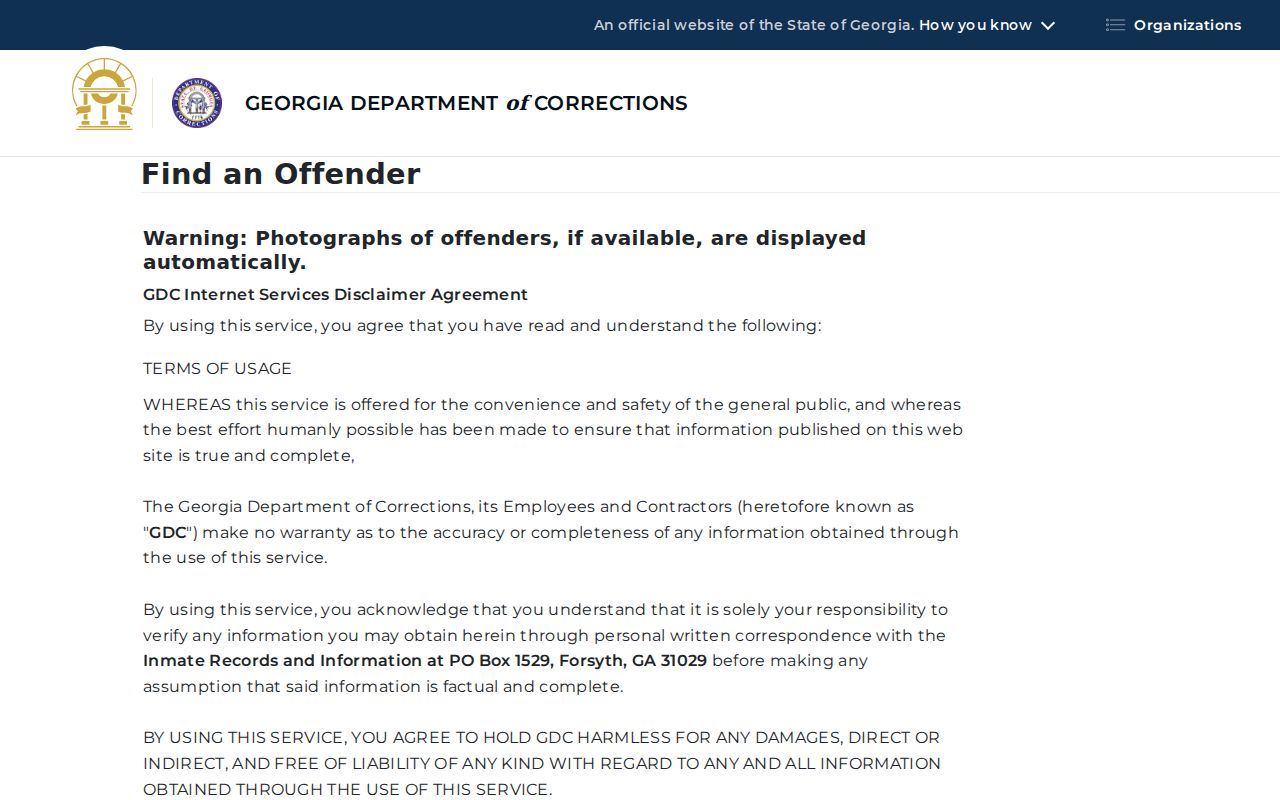
The query screen shows why keeper and custody level matter. A prosecuted Hall matter should be checked against the Clerk's docket for the filed charges and disposition.
The GBI Sex Offender Registry is the official Georgia registry channel, with its own access cautions.
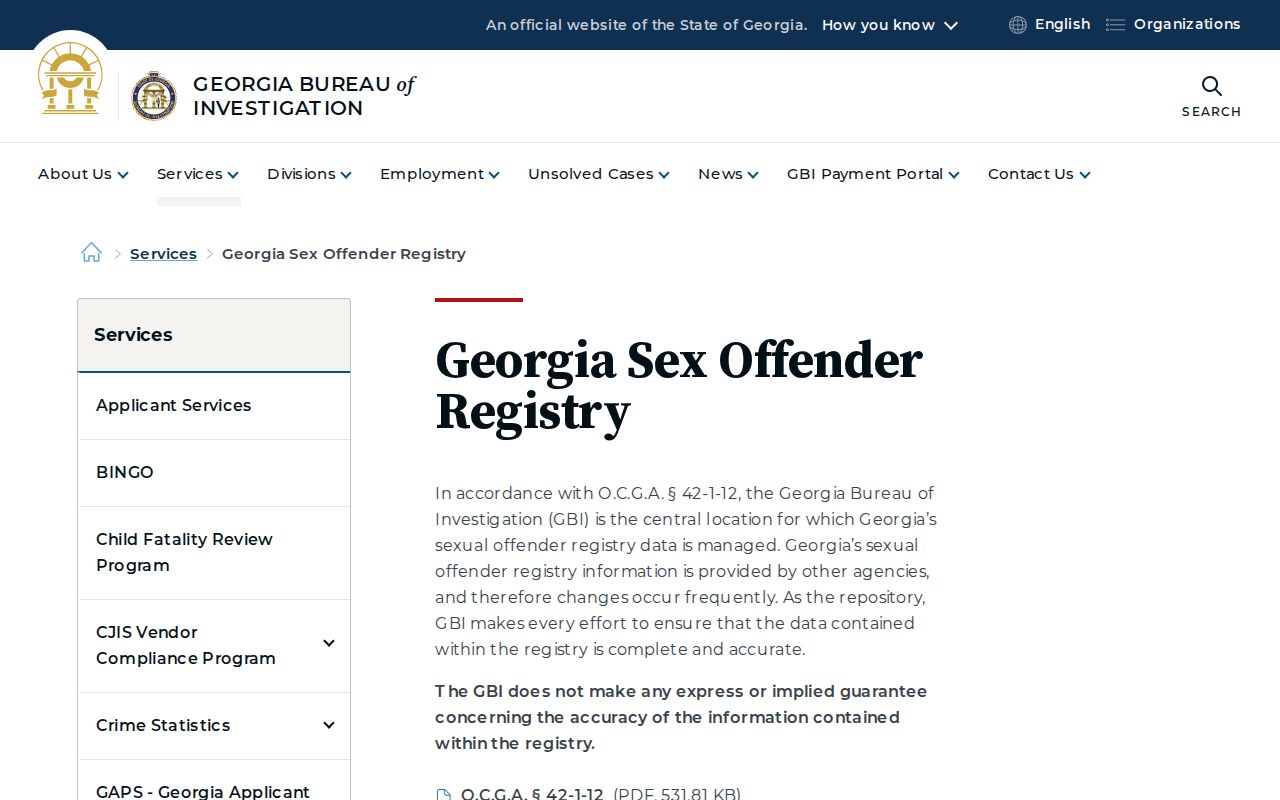
Registry results are identification and location records, not permission to contact, threaten, or harass a listed person.
Hall Business and License Records
Georgia keeps business entities and professional licenses in separate official systems. The Corporations Division business search can identify entities, registered agents, officers, addresses, and filing histories. Local trade names are part of the Hall Clerk's filing scope, while UCC records use GSCCCA rather than the corporation interface.
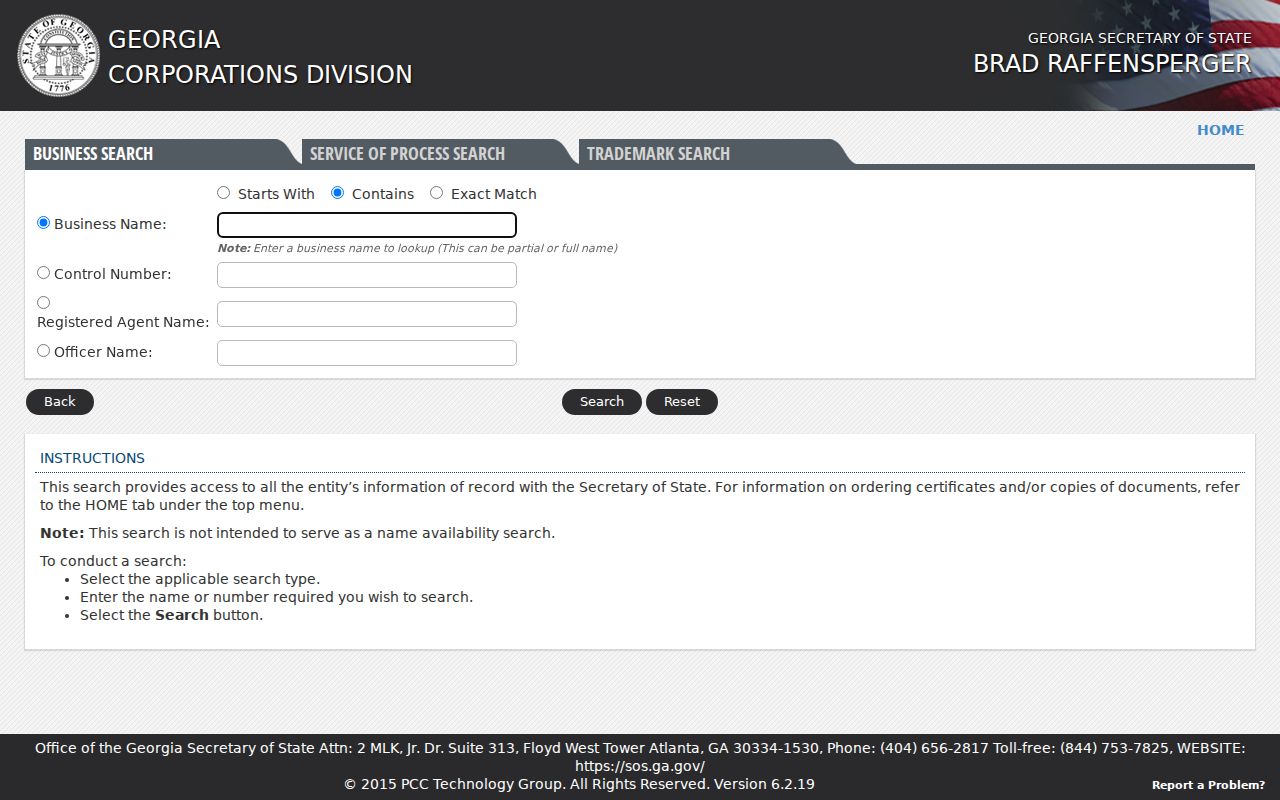
The business search is useful for confirming the official entity behind a seller, solicitation, or local filing. Certified copies remain a separate product.
The Georgia professional-license verification tool checks status through the SOS and participating boards; specialist professions may use another board.
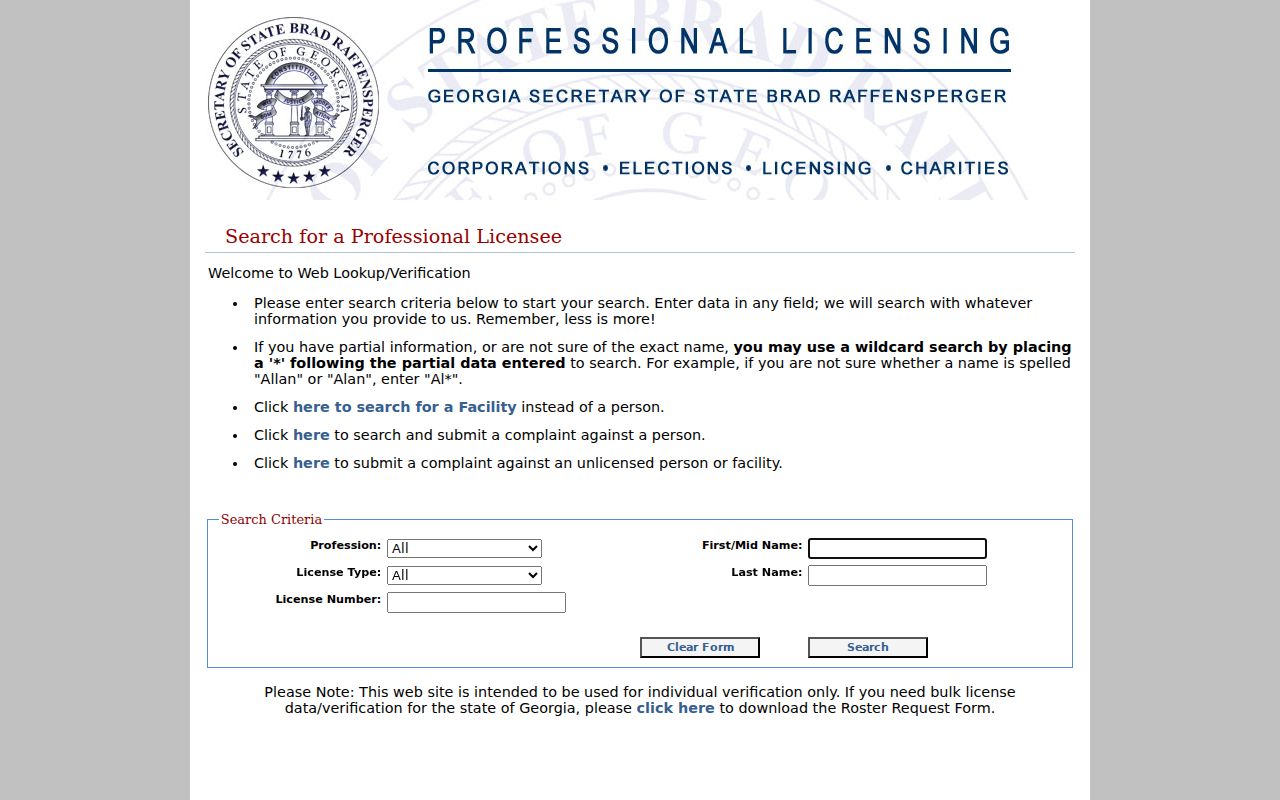
The verification screen helps distinguish a current public credential from an unverified claim. Public discipline and detailed documents depend on the responsible licensing board.
Hall County Public Records Custodians
No single counter controls every Hall record. These offices cover the major county-held groups and provide a direct fallback when a portal omits an old file, a document image, or certification.
Clerk Real Estate Division
116 Spring Street SE, basement
Gainesville, GA
770-531-7058
Deed and plat copy counter
Hall Probate Court
116 Spring Street SE
Gainesville, GA
770-531-6921
Estate, will, and marriage records
Hall Tax Assessors
2875 Browns Bridge Road
Gainesville, GA
770-531-6720
Parcel and assessment records
Hall County Sheriff
Hall County, Georgia
770-531-6885
Jail, booking, and incident records
Probate's published counter hours are 8:30 a.m. to 4:30 p.m. Court offices and the sheriff keep their own request paths. Elections and Environmental Health also sit outside the general county route.
Hall's July Records Routing Change
Hall moved general requests to new online software on July 1, 2026. That timely change makes custodian choice part of the request, not a small clerical detail. The Hall open-records page routes ordinary county records, but Sheriff, Elections, Environmental Health, and court files still use separate channels.
City records have another keeper. Gainesville uses its JustFOIA request portal for city departments. A police event in Gainesville, for example, should not be sent to the Hall general portal merely because the address lies in the county. Confirm which agency created the file, especially when a Gainesville mailing address may sit beyond city limits.
Note: Requests sent to the wrong Hall office can lose time even though Georgia law favors prompt access to existing nonexempt records.
Georgia Records Fees and Deadlines
The Georgia Open Records Act, O.C.G.A. §§ 50-18-70 through 50-18-77, allows any person to request an existing nonexempt record. The agency must respond within three business days. If production takes longer, it should identify the responsive material, give an estimated cost, and state when production is expected. An office need not create a report or compilation that does not already exist under § 50-18-71(j).
The first 15 minutes of labor are free. Added labor uses the rate of the lowest-paid qualified employee. Standard letter or legal-size pages may cost $0.10 each, while other media can be charged at actual cost. An agency may seek agreement when estimated charges exceed $25 and may require prepayment above $500. A denial should cite the precise exemption, often one found in § 50-18-72.
If a dispute remains, the Georgia Attorney General's Open Government Mediation Program and civil enforcement are potential escalation paths. Narrowing a broad request by date, name, record type, or file number can also reduce labor and delay without giving up the sought record.
Hall Record Privacy and Filing Alerts
Public access does not erase privacy rules. O.C.G.A. § 44-2-2 requires clerks to obscure Social Security and financial-account numbers in displayed recorded instruments. A person who finds such data in a deed image should contact the Real Estate Division with the book and page or instrument number and the exact page. O.C.G.A. § 50-18-78 also permits online property-record nondisclosure for qualifying law-enforcement personnel and teachers through Hall's specific application. It is not a general owner opt-out.
Georgia Safe at Home gives eligible survivors a substitute address and mail forwarding for future protection; it does not erase older deeds or court filings. Record correction must go to the government custodian with proof of the error. Removal from a commercial compilation follows a different privacy-request process and does not change the courthouse source.
Hall launched free GSCCCA FANS alerts on March 25, 2026. A subscriber can receive email notice of filing activity under selected names. The service does not block a filing, and alerts are not guaranteed complete. It is an early-warning tool, not fraud prevention.
File a Hall County Records Request
A useful Hall County public records request asks for a defined record, not research or analysis. Include names and variants, a focused date range, the record type, and any case number, parcel ID, booking number, or deed reference already known. State whether an electronic file, plain copy, or certified copy is needed.
- Choose the keeper. Send county administration records to the general portal, but use the separate court, Sheriff, Elections, or Environmental Health route when that office created the file.
- Check the index. Search the official deed, case, parcel, probate, business, or license portal first. Save the identifiers that will help staff retrieve the source record.
- Describe an existing record. Give the person or entity name, date span, event or filing type, and known file number. Do not ask the agency to build a new report.
- Select the copy form. Say whether inspection, electronic production, a plain copy, or certification is required, and ask for an estimate if fees may be significant.
- Review the response. Expect a response within three business days. If material is withheld, check the stated exemption and narrow or challenge the decision as the facts support.
Use records lawfully. Hall County records may support family history, estate work, seller verification, and civic review. Never use personal data to stalk, harass, threaten, or harm anyone.
The best request is short, exact, and sent to the right office. That approach also preserves the distinction between an index result, a produced copy, and a custodian-certified record.